Most people don’t wake up one morning and announce they’re taking a heritage trip.
It starts quieter than that. A comment at Thanksgiving dinner about a great-grandmother no one really remembers. An ancestry search that goes from hobby to obsession. A conversation where someone mentions their grandparents came from Poland, or Ireland, or China, and you realize they’re not just making conversation. They’re testing whether this matters enough to do something about it.
Heritage travel isn’t usually the trip someone plans first. It’s the trip they realize they need after years of wondering about the blanks in their family story.
We’ve planned heritage trips for families who had boxes of old documents and meticulous genealogies going back six generations and for people who knew almost nothing beyond a country name and a vague sense that someone came over on a boat a long time ago. Both trips mattered. Both required care. And both looked completely different from each other.
That’s the first thing to understand about heritage travel. It’s not one thing.
David and Rebecca’s Story
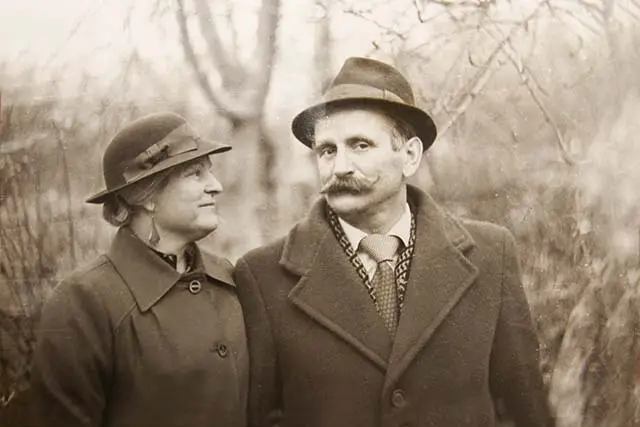
David and Rebecca were in their late forties when they reached out to us. Their children were asking questions about family history that they themselves had been wondering about for years but even their parents couldn’t answer with confidence.
Each of their grandparents had survived the Holocaust and emigrated to the US in the late 1940s. Built stable lives. Raised children with a clear message about moving forward, not looking back. When David and Rebecca started asking questions, the family story had large gaps. Their grandparents still didn’t talk about their experience and their parents discouraged them from asking questions. Names were missing. Places were vague. The Holocaust was acknowledged but never explored.
David and Rebecca’s interest in their family history was renewed by their children. They wanted to stand where their grandparents had lived, see what remained, and what didn’t. They wanted to go home able to talk with their own children about family history without the inherited silence that had shaped their own upbringing.
We planned a 12-day journey through Poland and Central Europe. Intentionally slow. Three nights in Kraków as a base. Two nights in a smaller town where records pointed to extended family. Two nights in Prague for broader context and space to breathe. No more than one emotionally heavy site per day.
One of the historians we worked with met them in Kraków. Over several hours at a table scattered with papers, she walked them through ship manifests and census records that matched variations of their family name. A spelling difference here. An occupation listed there. Slowly, a shape began to emerge. Their great-grandfather had been a leather worker. No one in the family had ever known that.
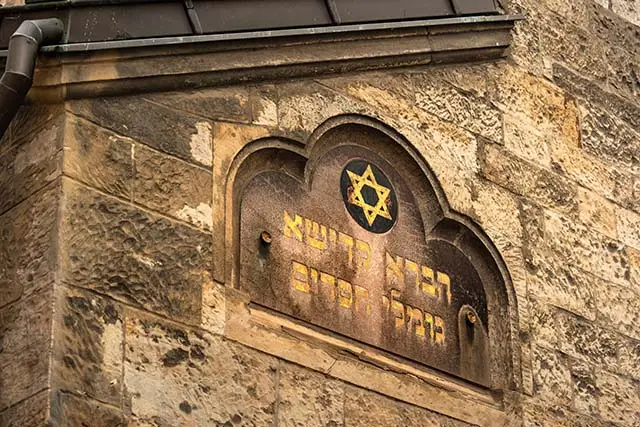
A few days later, they traveled to a small town in southern Poland. There was no synagogue anymore. It had been destroyed decades earlier. But the records survived. In a municipal archive, they saw a typed registry from the 1930s listing a family with their surname, living at a specific address on a street that still existed.
The building had been rebuilt. Nothing remained that could be pointed to definitively. And yet, standing there, they stopped talking. Rebecca later told me that this was the moment that broke her open. Not because it answered everything, but because it made the loss concrete. It was no longer abstract. It had an address.
The heaviest day came later, at Auschwitz-Birkenau. We had planned it carefully. No rushing. No additional commitments that afternoon. They told us how they walked mostly in silence because there was nothing to say.
By the time they returned home, they had not solved their family history. But they had changed their relationship to it. They could name places. They could describe lives, not just deaths. They could talk to their children without evasion.
The best part of the trip is never in the plan.
Detour is a weekly email about exactly those moments.

That’s one version of heritage travel. Deep. Intentional. Emotionally demanding.
But it’s not the only version.
My Own Accidental Heritage Trip
In about two months, I’m taking a heritage trip myself. Sort of.
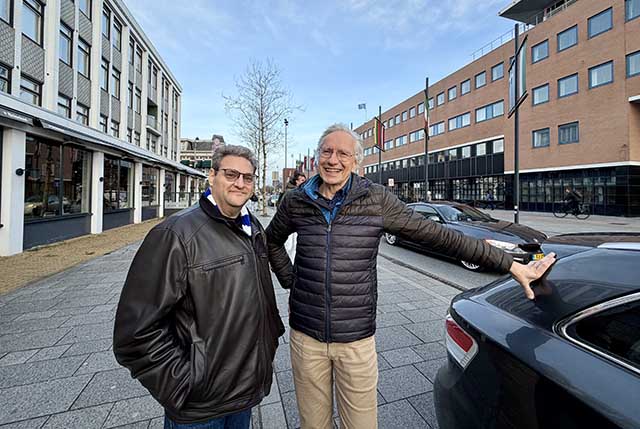
Here’s the thing. I didn’t plan it as a heritage trip. My business partner Jennifer and I are going on our annual River Cruise Summit with our parent company. Since the river cruise that ends in Amsterdam, she suggested we stay a few extra days to see some of the smaller Dutch cities. Made sense. Amsterdam is great, but there’s more to see.
What I didn’t know until recently is that Jennifer arranged for a tour guide who specializes in genealogy work. We gave him my family names and he looked up where my ancestors lived. When we get there, he’s going to show us around those cities and explain what he found.
I’m not even sure how I feel about it yet.
I’ve lived in New Jersey for 27 years, but I still tell people I’m from Michigan. Holland, Michigan, specifically. A small town with a large Dutch population where city names like Drenthe, Overisel, Zeeland, and Friesland were perfectly normal. I grew up thinking everyone knew how to pronounce those names and that windmills in people’s backyards were standard suburban decor.
But I don’t know much about my actual Dutch family history. I knew one of my grandparents, and not very well. I’ve heard stories about Grandpa Hank who liked to build decorative windmills, and Grandpa Mast who was a businessman, and Uncle Bob who was a charismatic salesman. Beyond that, it’s fuzzy. Either because I didn’t care that much when I was younger, because nobody really knew, or because it simply wasn’t discussed.
A few years ago, Jennifer and I were in Amsterdam on the same River Summit trip. She found the whole city disorienting. Nothing made sense to her. The layout, the canals, the way everything worked felt foreign and confusing. I had the opposite reaction. Everything made sense. I didn’t get lost, which is remarkable because I get lost everywhere. I can barely navigate my own neighborhood in New Jersey without GPS. But walking around Amsterdam, I just knew where to go.
We met a windmill owner at one point who saw my name badge and said, “They’ve spelled your name wrong, but you must be Dutch.” He told me he knew some Wesseldykes and in typical Dutch fashion, bluntly added, “They’re not very smart, but if you need a windmill serviced, they’re who you want to call.”
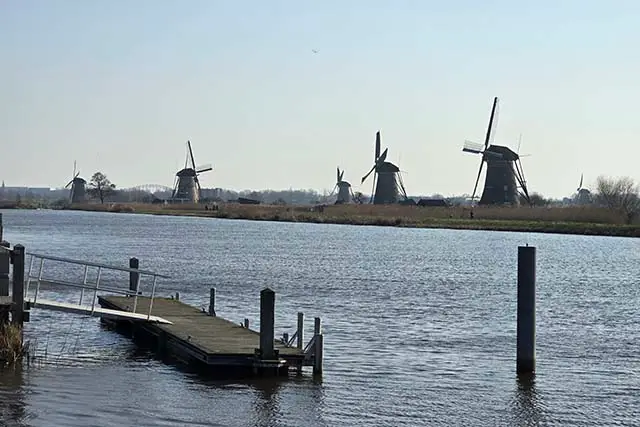
Everyone around me thought that was funny but rude. I found it funny, typically Dutch, and probably true.
From that moment, I wanted to go back and see more of the country. Not for any deep reason. Just curiosity. But the logistics never worked out until now.
So in a couple months, I’m going to visit cities I’ve never been to and learn about ancestors I have nothing in common with, beyond family names. I’m curious what I’ll find. I’m curious if the pieces will fit together in some way that helps me understand why Amsterdam felt familiar. I’m curious if this will mean something or if it’ll just be an interesting few days tacked onto a cruise.
I honestly don’t know yet.
What I do know is that this is also heritage travel. It’s lighter than David and Rebecca’s journey. Less emotionally fraught. More accidental than intentional. But it’s still about proximity. It’s still about standing in places that connect to where I came from, even if I’m not entirely sure why that matters to me yet.
What People Get Wrong About Heritage Travel
When someone mentions they’re interested in tracing their roots or visiting where their family came from, they usually make one of three assumptions.
First, they assume it has to be expensive. Custom guides, private tours, professional genealogists. That can be part of it if you want, but it doesn’t have to be. Heritage travel can be as simple as adding one day to an existing trip. Visiting a town while you’re already in the region. Walking through a cemetery. Sitting in a church your ancestors attended. Some of the most meaningful heritage experiences cost almost nothing.
Second, they assume it’s all or nothing. Either you plan an entire trip around genealogy research, or you don’t do it at all. That’s not true either. Heritage travel can be the whole trip, like David and Rebecca’s 12 days through Poland and Central Europe. Or it can be a single afternoon, like the customer who added a cooking class in Italy because one of his hobbies is cooking with his children and he wanted that experience in the place his grandparents came from.
Third, they assume there’s a right way to do heritage travel. In reality, it’s completely case by case. Some people want professional historians digging through archives. Some people just want to walk around and feel the place. Some want to find specific graves or buildings. Some want to understand the broader cultural context of why their family left.
The depth you go depends entirely on what you’re looking for and what you hope to gain from the experience.
How We Know When Someone Has Heritage as a Purpose
Most people don’t use the words “heritage travel.” They give clues instead.
They mention subscribing to Ancestry.com or another genealogy service when we ask about their hobbies. They casually throw out their cultural background in a way that suggests it matters to them. They ask if we plan trips to specific regions and when we ask why, they mention grandparents or great-grandparents being from that area.
Sometimes it comes up when we’re talking about a completely different kind of trip. A family is planning a Mediterranean cruise, and in the middle of discussing ports, someone mentions that their great-grandparents came from a small village a few hours from one of the stops. That’s when we know there could be a heritage component worth exploring.
When we hear those clues, we start asking questions. How much do they know about their family history? How much do they want to know? Do they have documents, names, locations? Are they hoping to find something specific, or are they more interested in the general experience of being in the place their ancestors lived?
The answers to those questions shape everything. Sometimes the family already has boxes of research and specific addresses they want to visit. Sometimes they know almost nothing and aren’t sure where to start. Both are fine. Both lead to meaningful trips. But they require different approaches.
How Planning a Heritage Trip Is Different
When someone books a relaxing beach vacation, we ask about resort preferences, activity level, and whether they want all-inclusive or à la carte. When someone books a cultural exploration trip, we ask about interests, pace, and the balance between guided experiences and independent exploration.
When someone books a heritage trip, the process is almost entirely collaborative.
We’re not telling them where to go or what to see. We’re taking the information they already have, helping them find more if needed, and using our network of guides, historians, and local contacts to make the trip as personal as possible.
For David and Rebecca, that meant connecting them with historians who could cross-reference family names with local registries and archives. It meant pacing the trip so they had time to process emotionally heavy experiences without feeling rushed. It meant building in lighter days in Prague so they could decompress and gain perspective on Jewish life that continued in different ways across Central Europe.
For a family visiting Scotland to explore clan heritage, it meant arranging a private tour of a clan seat and connecting them with a local historian who could explain the broader history of their family’s role in the region.
For the customer whose ancestors lived in that small Italian village, it meant hiring a driver for the day and arranging for a local politician and historian to show them around personally. Walking through streets where her ancestors lived. Visiting the church where generations of her family had been baptized and married. Sitting in a café talking about what life would have been like for her family a hundred years ago.
She talks about that experience multiple times a week, two years later.
That’s what changes when we understand someone’s heritage purpose. We don’t just book transportation and lodging. We create proximity. We design experiences that turn vague family stories into something defined and real.
The Transformation
Heritage travel doesn’t always give you the answers you’re looking for. Sometimes you don’t find the exact house or the specific grave. Sometimes the records are incomplete or the building has been destroyed or the town has changed beyond recognition.
But what heritage travel does give you is clarity.
It replaces vague loss with something concrete. It gives you language to talk about your family without fear or avoidance. It lets you honor ancestors not just as names on a family tree, but as people who once had homes, traditions, and lives.
For David and Rebecca, the trip changed how they saw themselves. It changed the way they talked with their children. It gave them a story they could carry forward with purpose, rather than unanswered questions they carried quietly.
For the customer who visited her ancestors’ village in Italy, it became the most meaningful part of an entire Mediterranean cruise. Not just a side trip. The defining experience of the vacation.
For me, I don’t know yet what the transformation will be. Maybe I’ll understand why Amsterdam felt familiar. Maybe I’ll connect with a sense of Dutch identity I didn’t know I had. Maybe it’ll just be interesting. But I’m curious enough to find out.
That’s the thing about heritage travel. The purpose isn’t always clear at the beginning. Sometimes you only understand what you were looking for after you’ve found it.
One Size Does Not Fit All
With every travel related conversation, every vacation planned, and every trip I personally take, my understanding of the seven purposes I’ve identified that drive meaningful travel grows. Whether it’s cultural exploration, expedition and adventure, faith and spiritual journeys, family heritage, special interest travel, multi-generational families, or just to relaxation and have fun, understanding the purpose changes the way people experience the world.
Heritage is one of those purposes, but you’re not limited to just one. The same person can take a beach vacation one year and come home relaxed and rejuvenated, then take a heritage trip the next year and come home with a deeper sense of identity and connection. Every purpose has its own benefit. When you combine purpose with thoughtful planning, any vacation that incorporates purpose becomes something more than just visiting a place.
If you’re starting to think heritage travel is something you’re interested in, or you’ve been curious about tracing your roots but weren’t sure how to turn that into an actual trip, that’s a conversation we have with our customers regularly. Visit the Start Planning page and we’ll help you figure out what kind of heritage experience actually makes sense for you. Sometimes it takes us asking the right questions to realize the importance of what you’ve been quietly wondering about for years.
Weekly e-mail from Joel Wesseldyke
The best part of the trip is never the part you planned.
Detour is a weekly story about exactly that moment. The turn nobody put in the itinerary that became the thing you still talk about years later. One email, every week, short enough to read before the coffee gets cold. The kind of thing worth forwarding to whoever is going with you.