Every time I go to Europe, at some point I have the same moment. I’m standing in front of something very old, and it occurs to me that American history doesn’t even register as a speed bump on the onramp of what came before us. We’re a young country with a short memory, and most of us don’t fully feel that until we’re standing somewhere that was already ancient when the Pilgrims were still debating whether to make the trip.
That’s the history part. The culture part tells you how that history shapes daily life and what it still means to the people living there now. Together, they’re the reason this kind of travel does something to you that a beach week simply doesn’t.
The most common objection I hear from people who think history and culture travel isn’t for them is some version of the cathedral complaint. One after another, room after room, date after date, until your feet hurt and your eyes glaze over and you’d trade a flying buttress for a decent burger.
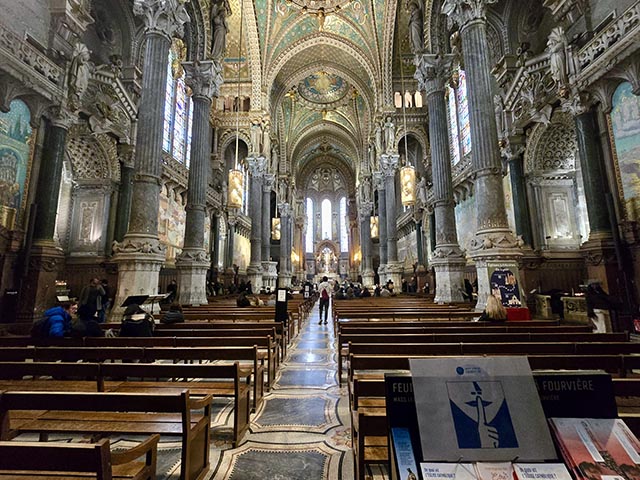
But a cathedral isn’t a building. It’s an argument that’s been going on for five hundred years. Beverly figured this out on a Viking Rhine cruise she and her husband John booked largely because the brochures kept showing up in the mail and the ships looked beautiful. They’d never been to Europe. What sold them on the specific itinerary was Christmas markets. Decorated villages, craft stalls, gluhwein. That part delivered exactly as advertised.
What they weren’t expecting was the fascinating history.
The Rhine valley is lined castles and the small towns where the ships docked had beautiful cathedrals. Beverly found herself pulled into something she hadn’t anticipated. She kept walking into cathedrals that had changed hands between Catholic and Protestant depending on who held political power in a given century, and she wanted to understand how that happened. How an entire region’s religious identity shifted with the throne. That’s not a history lesson. That’s a culture still shaped by decisions made a thousand years ago, and a good guide makes you feel the weight of it.
John’s interest landed somewhere different. He’s the kind of person who looks at a castle perched on a ridgeline above the river and immediately wants to know why it’s sitting exactly there. The answers are always tactical. Control the river, control the trade. Control the trade, control everything else. Military history and cultural geography, occupying the same view from the same deck chair.
They came home and started asking me about a Seine river cruise focused on Normandy and the WWII sites along the French coast. That was not a trip either of them would have described as interesting before they left for the Rhine. Something got reordered for them over there.
What I find interesting is that the same thing happens on completely different kinds of trips, in completely different parts of the world.
Scott and Sharon came to me wanting to experience Japan. Specifically the food, the culture, and the history. They had done enough research to know that a fully custom itinerary was the gold standard. A custom Japan experience built around their specific interests, with vetted local guides and privately arranged access, would have been extraordinary. It would also have been well outside their budget.
So I suggested a different option. A self-guided tour through Tokyo, Kyoto, and Osaka that included flights, hotels, the bullet train between cities, and a couple of guided activities. The rest of the time was theirs. Here’s the tour they took.
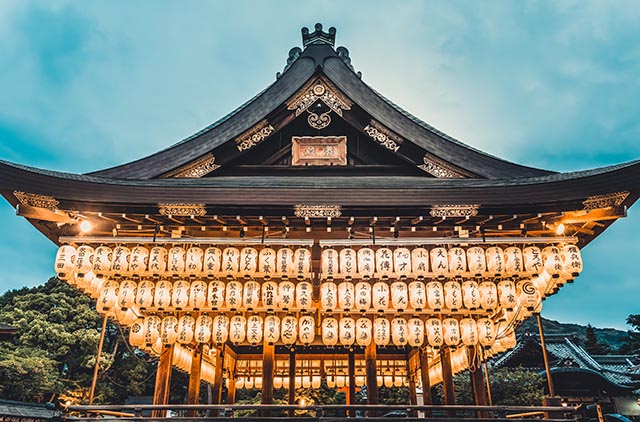
Having structure without a minute by minute itinerary turns out to be a very good way to experience a place on its own terms. Scott and Sharon tried food they never would have ordered if someone had been managing their schedule. They slowed down when something held their attention. And in Kyoto, they wandered into the Yasaka Shrine in the evening and found something that stopped them cold.
A traditional dance stage surrounded by hundreds of lanterns, each one sponsored by a local business, lit every night as they have been for generations. And a spring on the grounds where people still gather to apply water believed to improve appearance and skin health. Not a museum exhibit about an old tradition. The tradition itself, still running, still drawing people, still meaning something to the community around it. History preserved not in glass cases but in daily life. That’s the culture part, and it hits differently than anything you can read about in in a book.
Sharon described it the way people talk about things that surprised them into caring. That’s the whole point of this kind of travel, and no brochure is going to lead with it.
Which is worth addressing directly, because the way this category gets marketed does nobody any favors. If you’ve received a river cruise brochure recently, and if you’re in the right demographic you absolutely have, you’ve noticed what they’re selling. The staterooms, the dining, the all-inclusive pricing, the absence of casinos and waterslides. History and culture are in there somewhere, usually around paragraph four. “Sail through storied landscapes.” That kind of thing.
What the brochure can’t easily show you is that the landscape is storied because every bend in that river has a castle, a battle, a plague, a love affair, or a treaty attached to it, and the culture surrounding those events is still visible if you know where to look. A guide who understands both the history and what it produced in the people who lived through it is worth more than any stateroom upgrade. That combination doesn’t photograph as well as a beautifully set dinner table, so it doesn’t lead the campaign. But it’s the reason people like John and Beverly come home already planning the next one.
The ship is only partially the point. The carefully curated itinerary is not entirely the point, either. What history and culture travel actually delivers is a different relationship with the world you live in, and that part is almost never what gets advertised.
If you’ve talked yourself out of this because you assumed it would feel like homework, I’d invite you to reconsider. And if you’ve been waiting until you can afford the fully custom version, let’s talk, because there are more ways in than you might think to experience the world with a different focus and perspective.
A vacation planning conversation is free and takes about thirty minutes. If you’re curious whether history and culture travel fits where you are right now, reach out and Jennifer or I will help you figure it out.