
There is a version of the guided group tour that lives rent-free in a lot of people’s heads. It involves a forty-year-old motorcoach, a tour director with a microphone and too much enthusiasm, twelve-minute stops at places you actually wanted to spend an hour, and a dinner buffet that could generously be described as forgettable.
The modern guided group tour is something different. The question is not whether they’ve improved. They have. The question is whether this style of travel matches who you are, how you move through the world, and what you actually want to get out of a trip.
Neil and Leanne have been traveling with guided groups for years, and they are exactly who this type of travel was built for. They want to see the highlights. They want a framework. They want to arrive in a city knowing there is a plan, a guide who knows the place intimately, and enough built-in structure to keep things moving without feeling like they’re being marched through a museum.
Neil and Leanne love another aspect of guided group tours: the people. They have made genuine friends on these trips. They ask the guide where locals actually eat, then invite the couples they met on the bus to join them for lunch or dinner. The tour gives them a reason to be in the same place as interesting people they never would have encountered otherwise. For them, the social dimension is not a side effect of guided touring. It’s a major selling point.
That’s a specific type of traveler. And if you recognize yourself in that description, a well-matched guided tour might be exactly what you’ve been looking for without knowing it.
I’ve done three guided tours myself, so I can tell you from the inside what the experience actually looks like when it’s done well. My tour through Ireland is the one that comes to mind first, and not because Ireland needs any help selling itself.
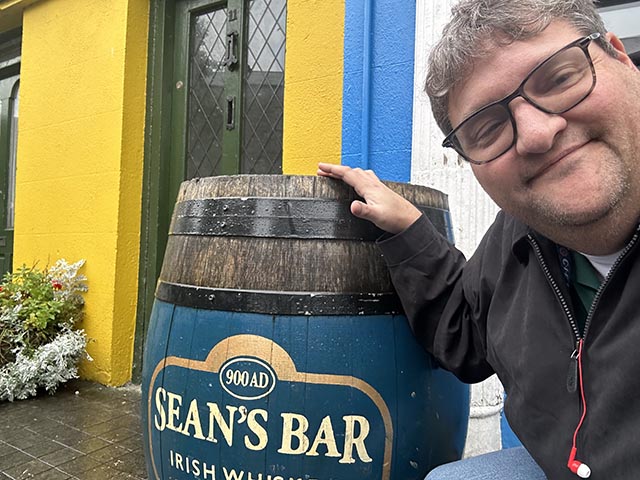
The motorcoach had WiFi and climate control that actually worked. I mention that not to set a low bar, but because the old stereotype involves a vehicle that smells like 1987 and a driver who doesn’t know where he’s going. This was not that. Every day included at least one stop along the way to wherever we were headed, sometimes two, with genuine free time at each. One afternoon we pulled off at Sean’s Bar, which has been open since 900 AD and claims to be the oldest bar in Ireland. The current owner of the bar told us about the town, the bar’s history, and the people who built it while we sipped Irish coffee. Nobody was rushed. Nobody was checking a watch.
The hotels were three and four star properties in the center of the cities, which matters more than people realize. Being centrally located meant that when the group day ended, we could walk out the front door and actually be somewhere. The trip was seven nights. We had five group dinners, four group lunches, and breakfast included every morning at the hotel. There were no optional add-ons, no moments where the tour director announced an activity and then mentioned the price. Everything was included and that was that.
That last part varies considerably by tour and by company, and it’s one of the first things I clarify when a client is comparing options. The number of included meals, activities, and stops is not standardized across the industry. Some tours are built around inclusions. Others give you a framework and a lot of free time to fill on your own, which is its own valid model depending on what you prefer.
The profile of someone who tends to thrive on a guided tour looks something like this. You like people and you’re good at meeting new people. You would rather see the Colosseum and understand its history from someone who knows it than spend three days trying to figure out which neighborhood you were supposed to stay in. You appreciate knowing what’s included because you’d rather not spend mental energy on a hundred small decisions. You’re not trying to prove anything. You want a great trip, not an adventure story about how much you figured out on your own.

A guided group tour is absolutely the wrong choice for certain people, too, and I’ll save you the trouble of finding that out mid-trip. If you want to make decisions on the fly, linger somewhere unexpected because the light is perfect and you’re not ready to leave, or find the family-owned trattoria three blocks off the tourist path where nobody speaks English and the pasta is life-changing, a group tour will make you quietly miserable. If you’re traveling with your family and want to move as a unit on your own timeline, the group format will work against you. If the itinerary is just a suggestion you’d rather ignore half the time, this is not your format.
Dave and Debby came in wanting to see Italy on a custom itinerary. They had a long list of things they wanted to see, pulled from years of recommendations from friends and travel shows, and every single item on it was legitimate. They wanted five-star hotels, brag-worthy tours, and our recommendations for local restaurants. The problem was the math. The list they brought in would have required somewhere around six weeks and a tolerance for moving at a pace that would have left them exhausted and resentful by day three.
As we worked through the list together and started prioritizing, something became clear. What Dave and Debby actually wanted was not the logistics of a custom itinerary. They wanted the experience they thought a custom itinerary would produce and hadn’t even considered that a guided group tour could deliver high-end accommodations, meals worth remembering, access to things that felt exclusive rather than generic, and enough breathing room to actually absorb where they were. When I put a specific guided tour in front of them that checked every one of those boxes, the only thing standing between them and booking it was the old Greyhound image they’d been carrying around. Once that got out of the way, it was an easy decision.
That is the matching conversation I have with almost every client considering this type of travel. The format is not the point. What you want to feel on the trip is the point. Sometimes a guided tour gets you there. Sometimes it’s exactly what you should avoid. My job is to know the difference.
If you are trying to figure out which side of that line you fall on, I’m glad to help you think it through. Visit the Start Planning page and lets have a conversation about what will deliver the best possible vacation experience.