Here’s something that took me by surprise the first time I stepped off a river cruise ship. No crowd. No gangway line. No tender. I scanned my card, walked through a sliding glass door, and I was standing in the middle of a European city. Just like that.
That moment captures a lot of what river cruising actually is, which is probably different from what you think it is.
I hear the same three things from people when river cruising comes up. It’s expensive. It sounds boring. And isn’t that for old people? Let me take those one at a time, because all three deserve a real answer.
The price conversation is the one that frustrates me most. Not because people are wrong, but because they’re working with incomplete information. River cruises are premium. Nobody’s hiding that. But when someone hears the price and walks away before understanding what’s in it, they’re making a bad comparison. Most river cruise fares include excursions in every port, WiFi, beer and wine with lunch and dinner, and a small-ship luxury experience with a staff-to-guest ratio that most hotels would struggle to match. The sticker price looks different when you realize you’re not going to spend the next ten days reaching for your wallet. When I explain the value properly, the sticker shock mostly disappears. It’s not cheap. It’s not supposed to be. But people who do the math usually find it’s a better value than they assumed going in.
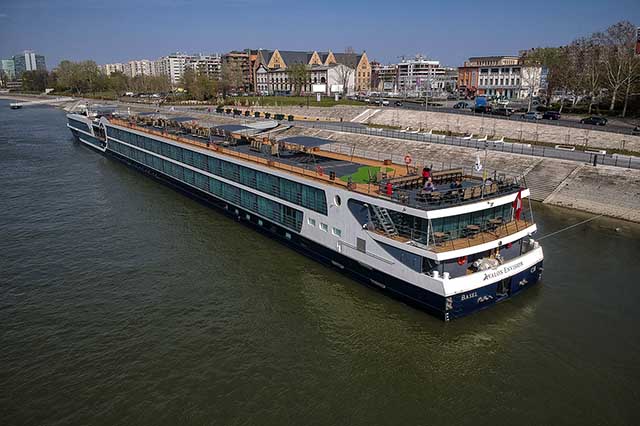
Now, boring. This depends mostly on your interests. If you aren’t the least bit interested in history, boring might be one of the words you use to describe a river cruise, but sprinkled in among the historic sites is plenty of shopping and delicious food. A typical river cruise day starts early. The ship docks in the heart of the city, not at some industrial port twenty miles from anything interesting. You walk off and a local guide leads you through historic sites and landmarks, explains the culture and history of the area, and points out what’s worth your time when the guided portion ends and you’re on your own. Most ports offer a choice of excursions: a walking tour, a cycling tour, and usually something more specialized if you want to upgrade. The days are full. Not frantic, but full.
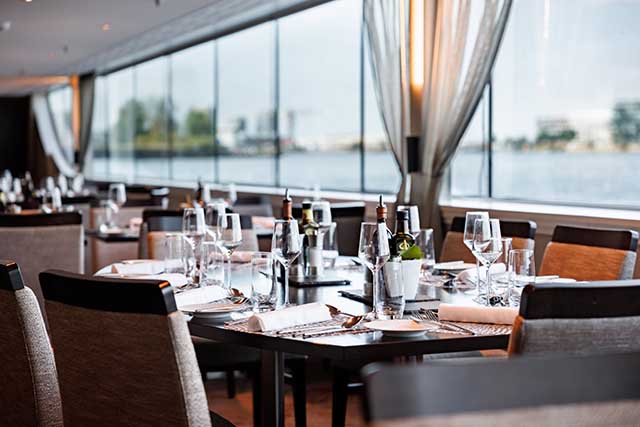
The ship itself is not just transportation. Think of it as a floating boutique hotel with around 150 to 200 guests (exotic destinations like Vietnam, South Africa, and Portugal have fewer) and a kitchen that takes the local region seriously with menus that change by destination. Dinners are four-plus courses, prepared by trained chefs using locally sourced ingredients. Lunch is more casual. Breakfast is made to order or from a buffet. In the early evening there’s a cocktail hour where guests mix and talk before the cruise manager walks through what’s happening the next day. The evening entertainment is more often than not a local performer or historian who knows the region and brings it to life in a way no shipboard production show could replicate. Boring is not the word that comes to mind.
One of my clients, Lynne, had only ever done guided group tours. She was interested in a specific river cruise built around a well-known actor who was leading a trip focused on the cities, sites, and stories from the television show he was known for. History and culture, which suited her perfectly. She was curious but not entirely sure about the cruise format, and she’s a hard no on ocean cruises, so the whole thing was a bit of a leap. She had an amazing time. Not just because of the special interest angle, but because the format fit her in ways she hadn’t anticipated. She’s since booked two more river cruises with the same line, no celebrity involved. She just liked river cruising.
The “old people” thing has a little truth to it, depending on the cruise line. The average age of river cruisers is trending younger, but 55 and up is still the core demographic. That said, anyone genuinely interested in history, culture, food, or wine is going to fit in regardless of age. The river cruise world has also expanded into special interest itineraries centered on wine regions, music, and art, and those trips pull a different mix of people. Still adults, but a different profile than a traditional European history cruise.
What river cruising is not: there are no casinos, no Broadway-style production shows, no big screens for movies or game nights, and one main dining room on most ships. The excursions also involve real walking. Even the “easy” options have meaningful mileage. If mobility is a concern, that’s an honest conversation to have before you book, not after.
I had a client named Jackie who went on a river cruise because her husband Rich wanted to go. Rich is a history buff. Jackie is not. She wasn’t sure she was going to enjoy it, and honestly, she was largely right. The history-focused excursions weren’t her thing. But she loved the food and wine, did some damage in some local stores, and as it turned out, she found her people. Several other spouses on board had made the same calculation she had, and they ended up with a little group of their own and many of them still keep in touch. She made the best of it and she’ll tell you she’s glad she went. But she’d also tell you it wasn’t the right trip for her. That’s a useful data point if you’re the Jackie in your relationship.
I just got back from a river cruise, and I love river cruising for the history and culture but one of my favorite experiences from this trip was a wine tasting we did in Rudesheim, Germany. We toured the original cellars (over 1,000 years old!) and tasted through a lineup of Rieslings. I was concerned because, to put it lightly, I do not like Riesling because it’s so sweet, which I assumed was just a characteristic of every type and brand. What I didn’t know is that Riesling runs a full spectrum from dry to dessert sweet, and each expression is completely different. Turns out, there’s a Riesling for everyone. I walked out of those cellars with a completely different understanding of a wine I thought I’d never enjoy.
That’s a small story, but it illustrates what river cruising delivers consistently. Interesting excursions that combine history, “education,” and unique experiences that you wouldn’t experience in any other context.
If you like a quiet environment, an immersive connection to the places you’re visiting, exceptional food and wine, and a pace that lets you actually absorb what you’re seeing, river cruising is probably going to exceed your expectations. You’ll step off the ship at the end having actually been somewhere, not just near it.
If you want to talk through whether river cruising fits where you are right now, visit the Start Planning page and let’s have a conversation about your interests and a little about what your idea vacation includes.