In Scotland, I went to order a drink at dinner and there were no cocktails on the menu. Just spirits. Local beers listed by name without description, with the assumption that if you’re sitting in a local pub in Scotland, you already know what you’re drinking. It was a small thing, the kind of detail you’d miss if you weren’t paying attention. But it told me something about the relationship between a place, what it’s known for, and the local culture that I kept thinking about for the rest of the trip.
Whisky in Scotland, Guinness in Dublin, Heineken in Amsterdam. These aren’t simply products made in those places, they’re products that in many ways define the places. Locals don’t visit the Storehouse or the Johnnie Walker building. They don’t need to. The product is already in their bones. What these brewery and distillery experiences actually do is hand visitors the vocabulary that locals were born with. For the right traveler, that vocabulary changes everything that comes after.
I have spent time in all three countries over the last couple years and did four different tasting and brewery / distillery experiences. What I came home with wasn’t a ranked list of which one was best, although I do have an opinion about that. I came home with a clearer sense of what they’re actually for and an understanding of how the experience differs for people who are passionate about the product vs going because it’s a tourist attraction.
Get Each Week’s Posts So You Don’t Forget To Come Back
Once a week I send a short note with links to everything I published. Think post-it note from a friend who happened to write three things worth reading.
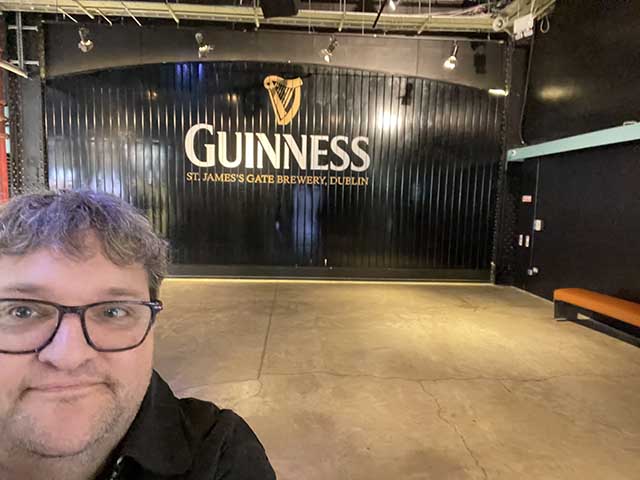
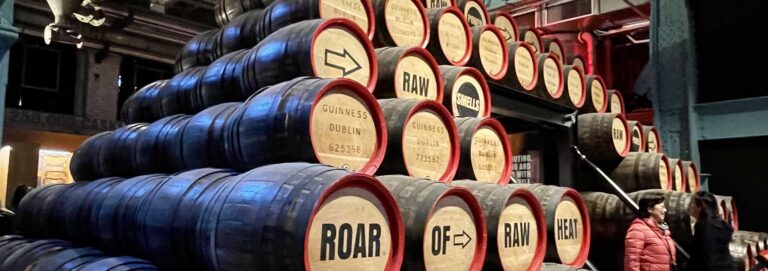
The Guinness Storehouse is the most visited tourist attraction in Ireland. Over a million visitors a year, seven floors, and wear comfortable shoes. The building is shaped like a giant pint glass, which tells you everything about how committed they are to the bit. We paid a little extra for a staff member to show us how to properly pour a Guinness. It’s harder than it looks. Jen did it significantly better than I did. The staff allowed us to photograph her pour and quietly set mine aside on the grounds that they didn’t want subpar images of their product posted anywhere online. I respected the commitment. I was also a little stung, but that’s between me and my pour.
What struck me more than any of that was what happened when we left.
Our guides mentioned almost in passing that Guinness tastes different from one pub to the next depending on how much volume the pub moves, how recently it was delivered, and how far it sits from the brewery. I was skeptical. It sounded like the kind of layering tours add to make an experience feel more significant than it is. We spent the afternoon working through a few different pubs anyway, and by the third stop the differences were unmistakable. I was wrong to be skeptical.
That afternoon is not something you find on a list of things to do in Dublin. It’s something that, for the right person, we build into the itinerary because we’ve done it and have a different perspective and understanding than you’d find in an online review. And, spending an afternoon or evening visiting pubs adds an extra layer to the experience when you visited the Storehouse first. The experience gives you a question. The city gives you the answer.
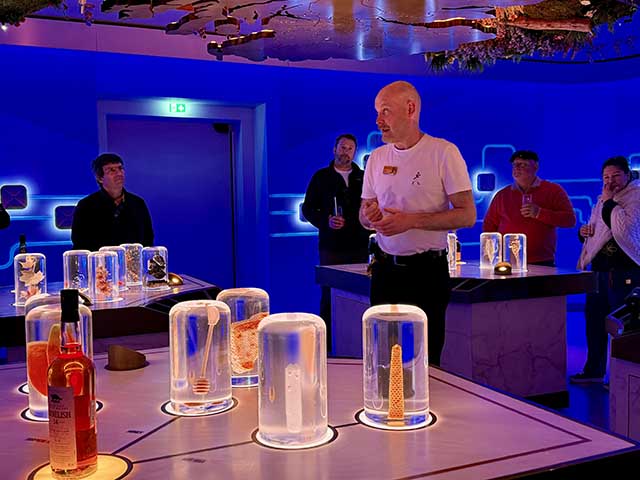
The Johnnie Walker Experience in Edinburgh works on the same principle, and it does it with considerably more production value. It starts with a quiz that builds a taste profile and assigns you a cocktail matched to your preferences. Jen’s was well-matched to her. Mine was not particularly well-matched to anything I would have chosen for myself. I drank it anyway. The history and process presentations that follow use moving floor tracks, props, and a wall of screens that I would describe as genuinely theatrical even if that makes it sound like I’m overselling it. I’m not. It was interesting and interactive. The first sections are entirely scripted, which I noticed, and it’s the only tour I’ve been on where that was openly the case. It doesn’t undermine the experience but I like interacting with the presenters and guides and that wasn’t an option for most of the presentation.
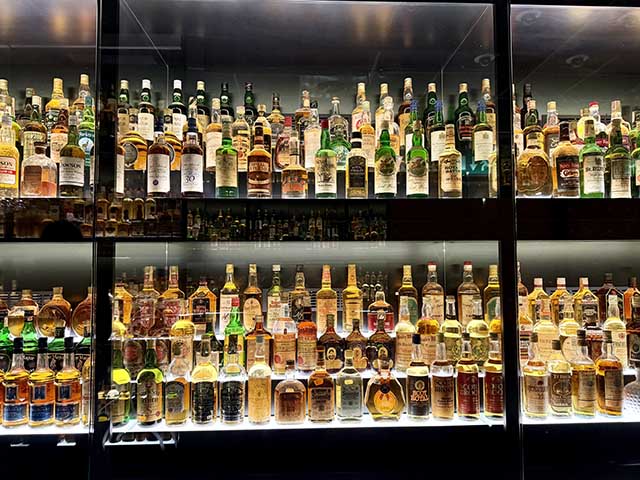
What it gave me was a framework. By the time we did the Scotch Whisky Experience the following day, a retail-run tasting focused entirely on the different whisky-producing regions of Scotland, I could actually use that framework. The regional differences are dramatic and more identifiable than I expected. After a relatively short time with a knowledgeable guide, I could taste where in Scotland something had come from. That changes your relationship with a whisky list in a way that’s hard to describe until it happens to you. The Scotch Whisky Experience is, to be honest about it, a well-produced sales presentation. The store holds the largest collection of Scotch in the world and the tastings are designed to move you toward it. If you’re a whisky person, or someone that likes branded trinkets it’s not a complaint.
Neither Jen nor I are beer drinkers. We went to the Heineken Experience in Amsterdam for the same reason I’ll watch a documentary about something I know nothing about: it was there, I was curious, and the brand story is interesting regardless of whether you care about the product. The experience is well-produced. The immersive section that puts you inside the brewing and bottling process is genuinely fun regardless of your relationship with beer, and the guided tasting is structured around color, smell, and taste in a sequence that actually teaches you something. We both enjoyed the beer in a way that caught us off guard. Jen had never tasted Heineken before. I’d had it a few times over the years without forming a strong opinion. What we had in that building tasted different from anything I’d had in the US, and the explanation for why, distance, storage, time in transit, made complete sense once I could taste it in a glass in front of me.
I’m still not a beer drinker. But I understood something about Amsterdam that I hadn’t before.
None of this is for everyone, and I’d never frame it as though it were. For the traveler who has a genuine relationship with beer or whisky, who would describe themselves as someone who cares about what’s in the glass rather than someone who just drinks, these experiences are not tourist attractions with a tasting room bolted on. They’re context. They give you access to something about a place that a walking tour or a cathedral doesn’t reach. The people of Dublin are not casual about Guinness. The people of Scotland are not casual about whisky. Understanding why, on a sensory level rather than just an intellectual one, changes how you move through those places for the rest of the trip.
A few years ago I sat down with a couple who were planning a trip to celebrate sixty years of marriage. They came in knowing they wanted to go somewhere significant while their health was still good and their energy was still there. Greece, Vietnam, Japan, Italy, Scotland. We talked through all of it. Cruises, guided tours, custom itineraries. We went around in circles for a while until he mentioned, almost as an aside, that he loves a good whisky. That was the moment. Everything started to organize around that one detail. Scotland made sense in a way the other destinations hadn’t quite clicked into place. A great historic city, manageable on foot with plenty of taxis when they needed them, and a whisky culture that runs deeper than any attraction can fully capture. They ended up on a small group guided tour with built-in free time, which we took advantage of to schedule some small distillery visits, the Scotch Whisky Experience, local pubs with serious whisky lists and food worth sitting down for. He came home fluent in a language he’d been speaking his whole life without knowing there were words for it.
That’s what I mean when I say planning conversations uncover more than people realize. We hear the thing a client says almost in passing, the casual detail they don’t think to lead with, and understand what it means for the shape of the whole trip.
If food and drink are genuinely part of how you experience a place, that detail belongs in our first conversation. It changes how we build your itinerary. If you’re thinking about a trip and want to talk through what matters most to you, start that conversation right here.
I write three posts a week. This is the one thing you do so you don’t miss them.
Once a week, short note, links to the posts. That’s it. No polish, no filler. Just a person who thinks about travel too much and writes it down.