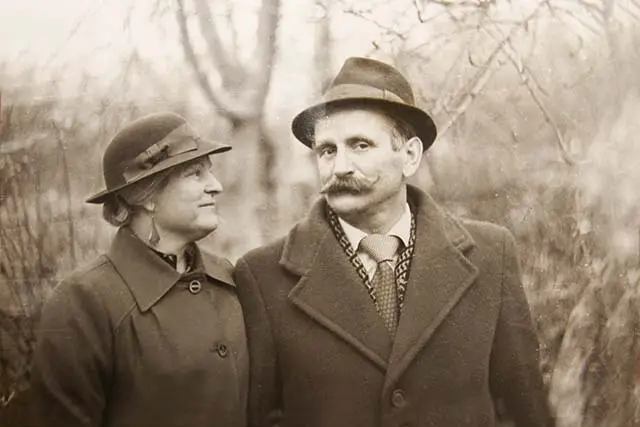
I’ve lived in New Jersey for nearly 30 years but grew up in Holland, Michigan. Windmills, tulip festivals, wooden shoes bolted to the outside of buildings. The Dutch heritage of that town was everywhere, and it was all kind of fun and a little cheesy, the way small-town identity tends to be. I never gave much thought to how any of it connected to me personally.
Turns out, quite a bit.
While Jen and I were planning our annual spring river cruise she had the idea to add a day and a half onto the end of the trip to hire a ancestry guide and trace my family history in the Netherlands. I knew it would be interesting but I wasn’t sure what to expect. I knew almost nothing about our family history, just a handful of surnames and the names of my grandparents and a few great-grandparents and a vague idea of where my ancestors lived. I figured it would be interesting to see the towns, maybe walk around a bit, take some photos. Interesting. That was the word I used.
Related: When Travel Becomes a Bridge to Who You Are
Related: Does Why You Travel Matter More Than Where You Travel?
That word did not survive the first afternoon.
I knew our guide, Jaap, had done some research using the names I gave him but by the time we arrived, he had researched my entire family history. Not a general overview of Dutch history and ancestry, but specifically my family. He knew where they had lived, where they had worshiped, where they owned farm land, and for those who weren’t farmers, what they did and where they worked. He had arranged visits to the places that mattered in their actual lives.
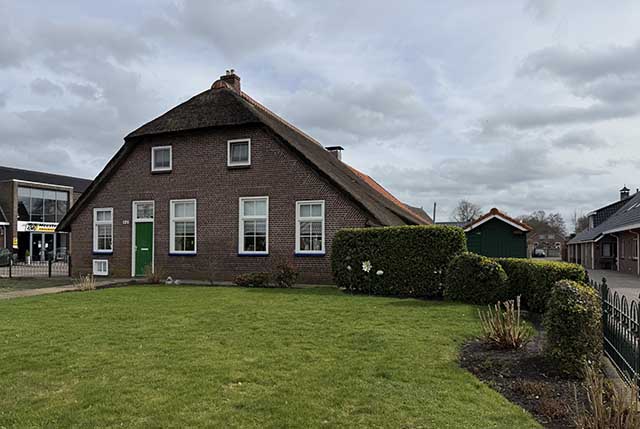
We walked through farmhouses that still stood. We stepped inside churches that were there before my ancestors ever set foot in them; where they were baptized, where they got married, where they sat every week and tried to make sense of life the same way people do now. There is something that happens to you when you touch a wall that your great-great-grandmother touched. I cannot fully explain it.
But here is where it got complicated in the best way.
Jaap told us that my family had been landowners. Farmers with real property, real wealth by the standards of their time. These were not people scraping to survive. They had something. And they gave all of it up to follow a minister named Albertus van Raalte to the American Midwest in the mid-1800s, joining the earliest settlers of a brand new community on the eastern shore of Lake Michigan.
You may have already figured out where this is going.
They named it Holland.
I will give the Dutch credit for their faith and their courage. Their creativity with geography, less so. They left towns in the Netherlands and moved to towns with the exact same names in Michigan. Holland. Zeeland. Overisel. I grew up surrounded by places named after places I had never been, and it never once occurred to me to wonder why.
What hit me harder than the names was the weight of the decision they made. These were not desperate people with nothing to lose. They had land, roots, a life that worked. And they walked away from it because they believed in something more than what they had. That kind of boldness is easy to romanticize from a distance, but standing in the actual places they left behind, you start to feel the size of it.
Then we visited the church.
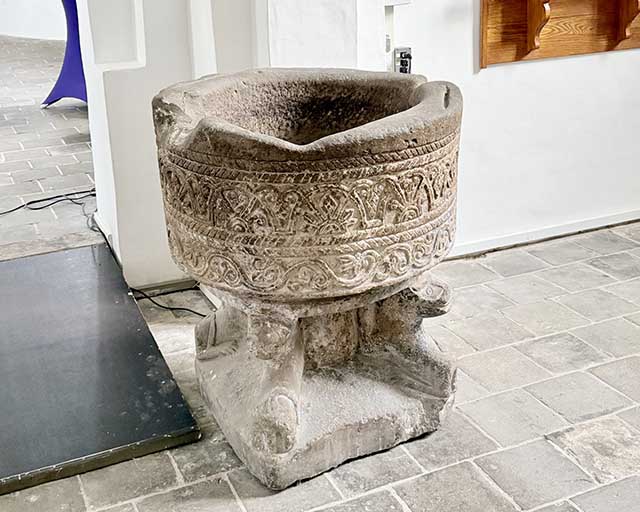
Van Raalte’s church, the one he led before the emigration. We went inside and sat down in the seats and looked at the original pulpit, a multiple hundreds of years old baptismal font used for my ancestors baptisms. It was quiet in the way that old churches are quiet, the kind of quiet that has weight to it. And something came over me that I did not see coming. I started humming a hymn. One I have known my whole life, one that I have sung in church as recently as a few weeks ago and as far back as I can remember, without ever thinking about who else may have sung it. Sitting in that seat, in that building, it landed differently. It landed like something returning to where it started.
I am not typically someone who cries on a Thursday afternoon in the Netherlands. And yet.
Here is what I want you to know. This was a day and a half. We attached it to the end of a river cruise we were already taking. It took some calls, emails, and a little research to find the perfect guide, explain what we wanted and put our faith in someone who knew what to look for and how to find it.
If your family came from somewhere, which of course they did, that somewhere still exists. The churches are still standing. The records are still there. The farmhouses, the village squares, the cemeteries with your family name on the headstones. It is all waiting for someone to go look.
I had no idea what I was walking into. That turned out to be the point.
If you have ever thought about tracing your family’s story through travel and did not know where to start, reach out and I will help you figure out whether this kind of trip makes sense for you and help you build it.